Showing posts with label USN. Show all posts

Monday, December 1, 2014

The Lexington-class: America's Only Battlecruisers

      Of the major naval powers at the end of WWI the U.S was the only power not to have built battlecruisers. The British pioneered the concept in 1907 with the HMS Invincible and were quickly followed by the Germans with the SMS Von der Tann. At the beginning of the 20th century it was a recognized deficiency within the U.S. Navy that there were not enough cruisers to scout and support the main battle line. Beginning in the early 1910s the General Board began to develop designs for what a U.S. battlecruiser should look like. In 1916 Congress granted funding for a class of six battlecruisers, but due to WWI construction did not start until 1920 after the U.S. entry into WWI and a major redesign of the class using British experience from Jutland. Unfortunately, or perhaps fortunately, the Lexington-class was one of the classes of ships scraped after the ratification of the Washington Naval Treaty. Of the six ships planned only two were completed (both as aircraft carriers), the Lexington and Saratoga of WWII fame. However, the focus of this post is on the Lexington-class in it's original battlecruiser form.
      In the early 1900s the General Board wanted to enlarge the U.S. cruiser fleet to provide scouts for the battle line of the Navy. Congress was unwilling to provide funds for the requested cruisers, rather focusing on battleships. This forced destroyers to take up the slack in acting as the eyes of the U.S. battle line. In 1916 Congress finally gave it's approval for a class of six battlecruisers to be completed by 1920. This first design approved by Congress was to be armed with 10 14in guns, a displacement around 33,500 tons (this first design is comparable to the British Renown), a top speed of 35 knots, and very thin armor. Work was ceased on the design with the American entry into WWI  in November 1917 as all shipyard capacity was devoted to merchant vessels and ASW craft. With the U.S. entry into WWI Britain gave the U.S. access to their experience with battlecruisers, especially that gained from Jutland. The two redesigns of the Lexington-class from 1917 until 1919 turned the Lexington-class into what was essentially a fast battleship, combining the speed of a battlecruiser with the firepower of a battleship. Armament was increased to 8 16in guns, armor was increased which resulted in a drop in the class's top speed to 33 knots. This redesign was heavily influenced by the HMS Hood which the British viewed as a hybrid battleship and battlecruiser.
     The final design specifications of the Lexington-class are drawn from Norman Friedman's U.S. Cruisers: An Illustrated Design History and Siegfried Breyer's Battleships and Battlecruisers, 1905 to 1970.
Displacement

Light ship
43,500
Deep load
44,938
Dimensions

Length (waterline)
850 feet
Length (overall)
874 feet
Beam 
105 feet
Draft (light ship)
30 feet
Armament

Main battery
8 16”/50 Mark 2 guns
Secondary battery
16 6”/53 Mark 13 guns 
Anti-Aircraft battery
6 3”/50 Mark 10 guns
Torpedo Tubes
8 21” Tubes
Armor

Main side belt
7” tapering to 5” at the ends of the ship
Upper deck
1.25” to 2.25”
Upper armored deck
1.5”
Lower armored deck
2”
Machinery 

Shaft horsepower
180,000 SHP
Maximum speed
33.25 knots
Endurance @ 10 knots
10,000 miles


16"/50 Mark 2 outside the Washington Naval Yard in 1974
     The Lexington-class battlecruisers were to carry a main armament of eight 16"/50 Mark 2 guns in four twin turrets. Originally the Lexingtons were to be armed with 14 inch guns, but were upgunned due to the increasing caliber of naval guns worldwide and the longer range and better penetration of 16" guns. The Lexingtons were also to carry 16 6"/53 guns (10 in casemates and 4 in open air) to defend against destroyers. The anti-air armament consisted of 4 3"/50 guns at the time of the design, but by the time the ships were being built the number was upped to 8. Had the Lexingtons been built as planned it is likely that their casemate guns would have been removed and replaced at some point, and the guns mounted in the open would have been removed in the 1930s to make room for an increased AA armament. Their AA armament would have also been exponentially increased with everything from 0.50" MGs in the 30s to twin 5"/38 guns and 40mm Bofors cannons by WWII. To get an idea of the layout of the armament to be carried by the Lexington-class below is a sketch produced by the General Board in 1919 which was one of the later designs and extremely similar to the final design (I know there is an actual line drawing of the Lexingtons produced by the General Board in June of 1919, but the Navy does not seem to have it in their online archives).
(Click on the photo to enlarge)
     The armor scheme on the Lexingtons was influenced by the HMS Hood in that the main side belt was inclined outwards at 11.5 degrees to increase it's effective thickness against horizontal fire. The main side belt was to have a maximum thickness of 7 inches tapering to 5 inches at the ends of the ship. The cumulative deck protection was 3.75 inches split between the main deck, the protective deck, and the splinter deck. Turret armor was 11in on the face, 6in on the sides, and 5in on the roof of the turret. Comparatively, the Hood had a main side belt of 8in which thinned to 5-6in at the ends of the ship. Deck armor was 3in amidships, and 7in over the magazines.
     The top speed of the Lexington-class as designed was to be 33 knots. The Lexingtons would have had 16 Babcock boilers powering 4 GE turbines, each turbine driving one of four propellers. Total shaft horsepower of each Lexington was to be 180,000 SHP. This powerful machinery would later prove invaluable during the Lexington and Saratoga's days as carriers. To compare against a contemporary battlecruiser, the Hood had a top speed of 31 knots during trials, and that achieved by pushing her boilers beyond design specifications (the design SHP of the Hood was 144,000 but the speed of 31 knots was achieved with 151,280 SHP).
     While the Lexington-class was the only class of battlecruisers built (not commissioned) by the U.S. Navy, the Alaska-class have also been referred to as battecruisers in the last few decades in various books. However, the Lexington-class was designed explicitly to act as scouts for the main battle line of the Navy and to act as a fast squadron as part of the battle line itself. The Alaska-class was designed as a "cruiser-killer" meant to take on Japanese heavy cruisers, and escort carriers on operations independent of the Battle Force without detracting from the firepower of the Battle Force. The design requirements were different for the Lexingtons and the Alaskas. The Lexingtons were faster, better armored (relative to the Alaskas), and better armed than the Alaskas to carry out their mission of supporting the battle line. Whereas, the Alaskas were meant to operate apart from the Battle Line supporting carrier operations. Any comparison between the two class is wrong because they were designed for different mission sets.


Wednesday, January 8, 2014

Alaska-class CBs: America's Cruiser-Killers

     The United States Navy has never officially completed any ships under the designation "battlecruiser". There was a class of battlecruiser constructed during the early 1920, the Lexington-class, but none were completed as battlecruisers (two were completed as aircraft carriers). However, during WWII the U.S. commissioned two vessels known as the Alaska and Guam. They were designated "large cruisers", but had some characteristics of battlecruisers. This post will cover the mission for which the Alaskas were designed, their specifications, armament, armor scheme, propulsion, and their operational history.
     At the time the Alaska-class was designed, the Japanese heavy cruisers were becoming a threat to any then-future carrier operations independent from the Battle Force. At the same time, Germany was building the Duetschland-class "pocket battleships" for commerce raiding. France was also rumored to be developing a class of 17,500 ton commerce raiders carrying 12in guns. Thus, a class of ships was needed to be able to escort carriers, and defend the carriers without detracting from the firepower of the Battle Force. At, the same time this class would have to be able to hunt down and kill enemy commerce raiders. This is the niche that was to be filled by the Alaska-class.
      Final design specifications of the Alaska-class are drawn from William Garzke's Battleships: United States Battleships, 1935-1992:

Armor

   light ship
25,971 tons
   standard
27,000 tons
   full load
34,253 tons


Dimensions

   length overall
808’ 6” (246.431m)
   waterline length
791” 6” (241.249m)
   maximum beam
90’ 9.375” (27.670m)
   maximum draft
31’ 9.25” (9.684m)


Armament

   main battery
9 - 12”/50 (305mm)
   secondary
12 - 5”/38 (127mm)
   antiaircraft
56 - 40mm/56

34 - 20mm/76


Armor

   main side belt
9.0” tapered to 5.0”, inclined 10 degrees (229mm-127mm)
   main deck
1.40” (34mm)
   second deck centerline
2.80” + 1.0” (71mm + 25mm)
   third deck
0.625” (16mm)


Machinery

   shaft horsepower
150,000
   maximum speed
33 knots
   endurance @ 15 knots
12,000nm
     Armament. The Alaska-class was the last class of ship in the U.S. Navy to carry 12in guns, and probably the last in the world. However, the guns that the Alaskas were equipped with actually outclassed the 14"/45 Marks 1, 2, 3 and 5 guns carried by the New York-class and Pennsylvania-class battleships early in their careers. Specifically the guns carried by the Alaskas had better penetration capabilities than the earlier 14in guns at all ranges*. This was achieved by the use of the Mark 18 "super-heavy" AP shell which weighed in at 1,140lbs (517kg). The main battery turret armor was 325mm on the face, 152-133mm on the sides, and 127mm on the roof. The secondary armament consisted of 12 5"/38 guns in 6 twin mounts. Antiaircraft armament consisted of 56 40mm/56 cannons in 14 quad mounts, and 34 20mm/76 cannons in single mounts.  The massive secondary and anti-aircraft armament carried on the Alaska-class made them immensely valuable for kamikaze defense late in WWII. Had the Alaskas been kept in service after WWII, it is likely their 20mm cannons would have been removed entirely, and their 40mm mounts replaced by the then-new 3"/50 Mark 27 guns.
The Guam in Pearl Harbor in February 1945
     Armor. Armor was as listed above in the specifications. Additional armor numbers are, 280 to 330mm for the barbettes, and 270 mm on the control tower. As to underwater protection, it was almost nonexistent on the Alaska-class. Rather, the Alaskas relied on internal subdivision as protection against torpedo and underwater shell damage.  
      Propulsion. The Alaska-class ships were driven by four sets of General Electric geared turbines. The turbines were driven by eight Babcock & Wilcox Express boilers. The max steam pressure for the boilers was 45kg per square cm. The turbines drove four propellers. Top speed as designed was 33 knots, but the trials showed a top speed of 32.72 knots. Electricity was provided by four generators. Each engine room (there were two) had a single General Electric turbo-generator rested at 1,000kW, 450V AC. At either end of the propulsion spaces were single GE generators each rated at 1,062kW, 450V AC.
      The Alaska-class did suffer from a number of problems. The Alaska-class lacked sufficient space for a CIC, making conditions extremely crowded. The Alaska-class also had relatively thin armor for her displacement, at a time when it was possible to give ships a high speed even with thick armor (see the Iowa-class). The top speed of 32.72 knots achieved during trials lower than what was predicted or designed. Finally, underwater protection aboard the Alaskas was nonexistent. Any conventional side protection scheme was sacrificed to reach higher speeds, and would have left the Alaskas vulnerable to torpedo attack had the Alaska entered the war earlier than they did. This with a displacement approaching that of battleships.
      History. Construction of the Alaska-class was authorized by the Two-Ocean Navy Act in 1940. Six vessels were authorized, of which two were completed, three were cancelled, and one was scrapped before being commissioned. The two vessels that were completed were the Alaska and Guam. The Alaska was laid down on 17 December 1941, and commissioned 17 June 1944. The Guam was laid down on 2 February 1942, and commissioned on 17 September 1944. The third vessel which was constructed, was the Hawaii. She was launched, but never completed (more on the Hawaii later).
        Operational History. The Alaskas both had very short careers. The Alaska first screened aircraft carriers attacking the Japanese Home Islands in March 1945, and destroyed two Japanese aircraft on 18 March. She then participated in shore bombardment of Minami Daito Jima on 27 March, and in late July took part in sweeps of the East China Sea. After the Japanese surrender the Alaska supported minesweeping operations along the Chinese coats, supported Army landings at Inchon on 8 September,  and sailed to Tsingtao to hold the port by force until Marines arrived to take over.  The Guam arrived at Pearl Harbor on 8 February 1945, and sailed for Ulithi on 13 March joining the Alaska. From there the Guam escorted TF 58 on a raid of the Japanese Home Islands, breaking off on 19 March to escort the USS Franklin back to Ulithi. On 27 March the Guam participated in a bombardment of Okinawa. From the Invasion of Okinawa to the end of the war, the Guam participated in a series of raids in the east China Sea and the Chinese coast. After the end of the war the Guam showed the flag along the Chinese coast, and participated in the occupation of Korea.
The Hawaii just prior to the suspension of her construction.
      The Hawaii. The Hawaii was never completed, and she was scrapped in 1959. However, before her scrapping there were two proposals to convert her. One proposal was a conversion to a command ship similar to the Northampton, but larger. This proposal was nixed when it was shown that an escort carrier, the Wright, could the same thing for cheaper. The second proposal was a conversion to a guided missile cruiser, carrying an ASROC launcher, twin Talos SAM launchers, and twin Tartar SAM launchers. Other variants of the missile proposal included fitting the Hawaii with 12 U.S.-built V-2 missiles, or later 20 Polaris ICBMs. In the end the missile proposal was scrapped as being too costly.
      The Alaska-class cruisers were neither battlecruisers or battleships, regardless of their appearance. They were designed from the beginning as a counter to perceived threats from hostile cruisers. Their main armament was meant not for slugging it out with enemy battlewagons (though it is possible the 12/50 Mark 7 may have been better than the 14" guns carried by the Kongo-class battlecruisers), it was meant to overwhelm an enemy heavy cruiser. The mission the Alaskas were designed was by 1944, non-existent, and in hindsight they were unnecessary. They were anachronisms born from the lifting of the Washington Treaty restrictions on cruisers. Regardless of that fact, they served well and were not inherently bad ships.


*Unfortunately, I cannot link directly to penetration tables for the 12in/50 and 14in/45 guns. If you wish to compare the penetrations for the guns, the requisite tables are on the NavWeaps pages for each gun.  The NavWeaps pages are linked to in the post.

Friday, July 19, 2013

Navy Wants To Increase AIM-9X Range By 60%

    From Flightglobal:


The US Navy is hoping to increase the range of the new Raytheon AIM-9X Block III by some 60% over current Sidewinder variants due to the unique needs of the Lockheed Martin F-35 Joint Strike Fighter, the Naval Air Systems Command (NAVAIR) says. The new weapon is scheduled to become operational in 2022.
"The Block III range requirement was in response to Joint Strike Fighter requirements in the 2020+ timeframe," NAVAIR says. "The design is anticipated to increase AIM-9X employment ranges by 60%."
NAVAIR says the current Block II AIM-9X already overlaps some of the range capability of the more powerful Raytheon AIM-120D AMRAAM, however the new Block III variant will increase that overlap. The AIM-9X Block III's increased range will "provide fighter aircraft with increased capacity of BVR [beyond visual range] weapons for tactical flexibility," NAVAIR says.
The need for that added flexibility arises from the proliferation of advanced digital radio frequency memory (DRFM) jammers that many potential adversaries are adding to their fighter fleets. DRFM jammers have the potential to blind the AMRAAM's onboard radar, which makes the AIM-9X's passive imaging infra-red guidance system a useful alternative means to defeat those threats. While a completely new missile would have been ideal, the Pentagon is faced with era of declining budgets and has to take into account the price tag of any new weapon.
"Programme affordability was a primary concern for new missile development," NAVAIR says. "Modifying the existing AIM-9X for increased range provides a highly affordable solution for meeting the performance requirement."
To create the new AIM-9X Block III, the NAVAIR will primarily focus on the missile's rocket motor. "Increased range will be achieved through a combination of increased rocket motor performance and missile power management," NAVAIR says.
In addition to an improved, more energetic, rocket motor, the enhanced weapon will also have a new insensitive munitions warhead, which will be safer to use onboard an aircraft carrier. However, the Block III will "leverage" the current Block II's guidance unit and electronics-including the missile's AMRAAM-derived datalink.
While the Pentagon needs the new Sidewinder to be a supplemental BVR weapon for situations where friendly fighters are faced with electronic attacks that degrade with radar-guided weapons, it will not compromise on the AIM-9X's close in performance. "The requirement and design call for the same WVR [within visual range]/HOBS [high off-boresight] capabilities as those found in the AIM-9X Block II," NAVAIR says.
     S[ecs on the AIM-9X are sketchy, Global secuirty listes the range of the AIM-9X as 18-32.4km, Wikipedia has it as 1.08-39.6km. Increasing the range on the AIM-9X would give a max range of somewhere between 52 and 63km. That put the AIM-9X firmly into AMRAAM territory, though the AIM-120D has a range of 180km. Bill Sweetman has speculated that the Navy's request for longer range Sidewinders stems from possible difficulties in using radar guided missiles against Chinese stealth aircraft. If that is the case, then the Navy sees a threat originating from Chinese stealth fighters. 

Thursday, July 11, 2013

Pegasus-class: The 1970s LCS

8 Harpoons, a 76mm gun, and a top speed of 48 knots. Faster and better armed than the LCS, launched in '75, decommissioned in '91.  Video shows off the Pegasus, and provides an overview of hydrofoil technology.


Video Credit: Jeff Quitney


Friday, July 5, 2013

Flashback Friday: Tillman Battleships

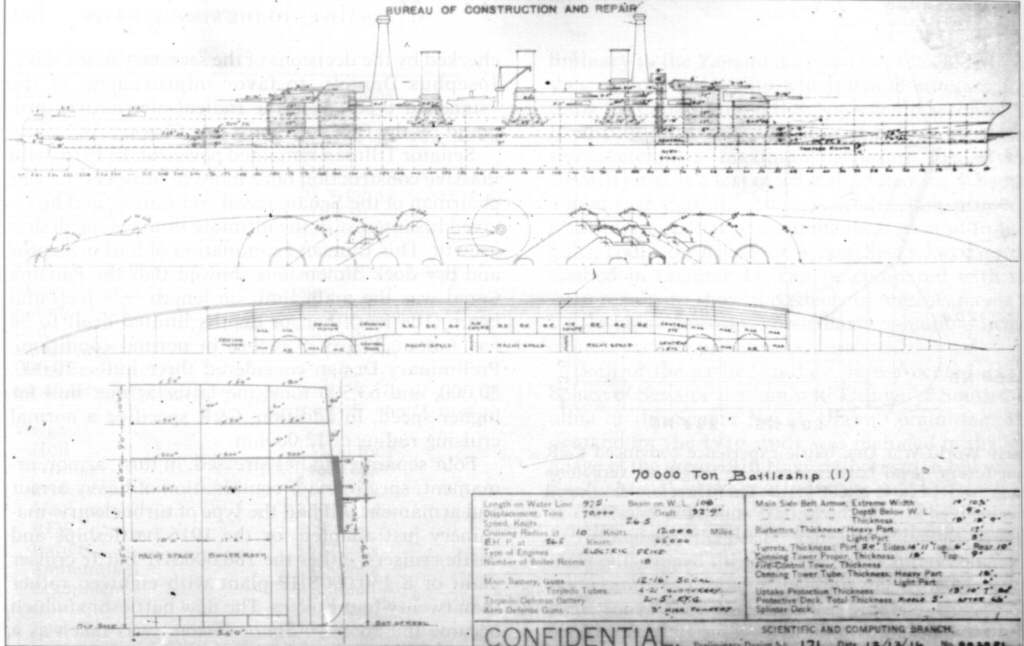
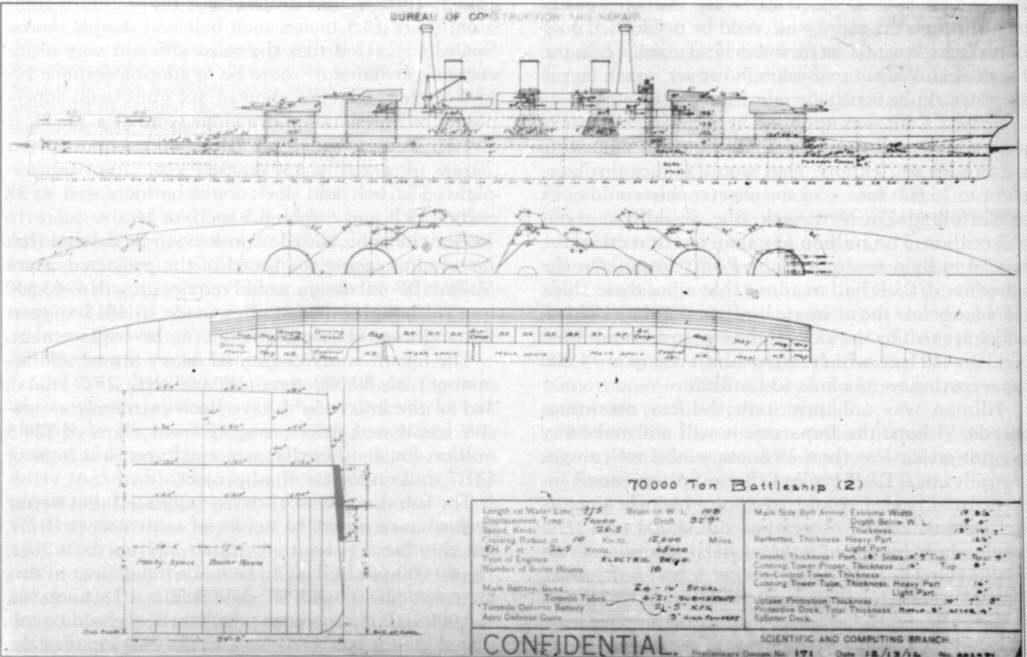
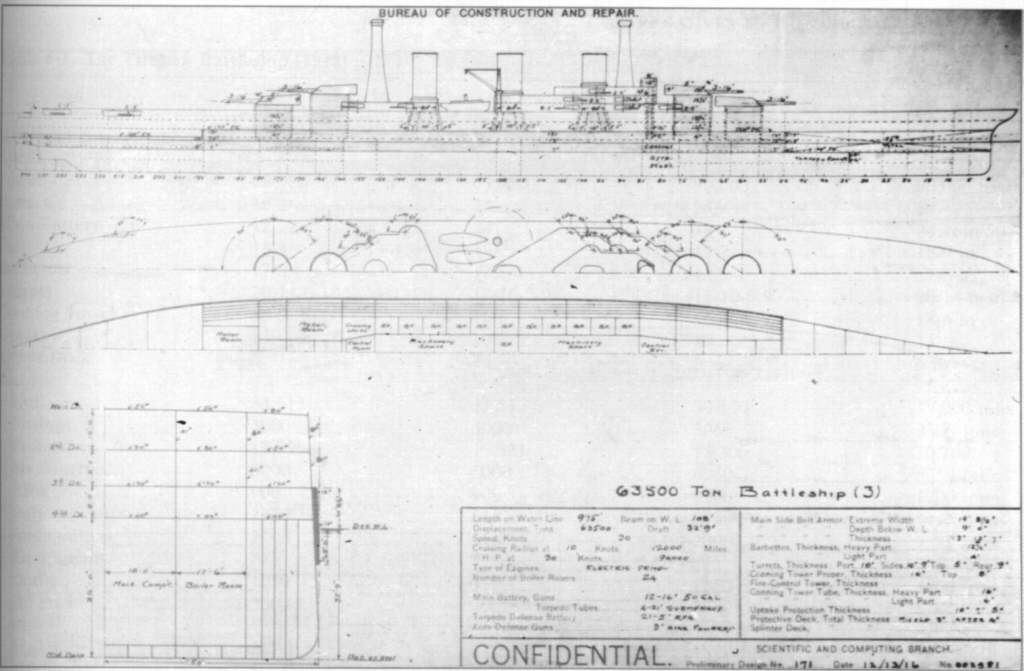
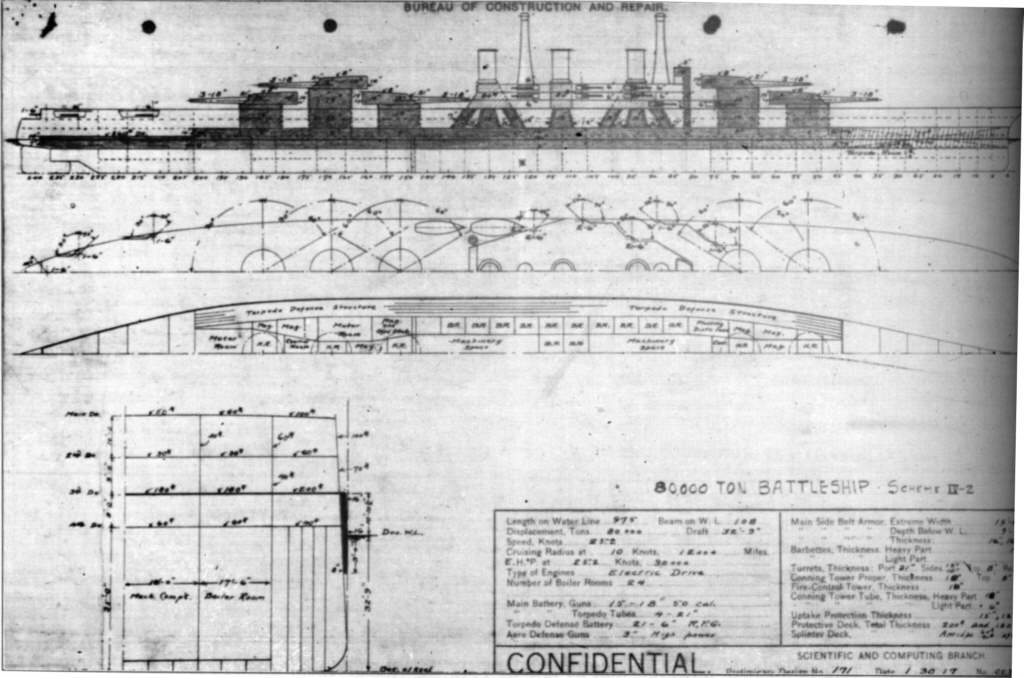
     This week's Flashback focuses on the Maximum Battleship designs of 1916. In 1912-13 Senator Benjamin "Pitchfork" Tillman asked the Navy to provide designs for the largest practical battleship the Navy could use. Tillman was on the Senate's committee on Naval Affairs, and he was unhappy with the Navy building battleships larger than what Congress authorized. It was not until 1916, after Senator Tillman asked again, that the Navy provided designs for four battleships. It would take several paragraphs to explain all the specs on the designs, so here is a table of specs from the Wells Bros. Battleship Index:

DesignTillman BattleshipsSouth Dakota(BB-49) class (For comparison) 
#1#2#3#4 IV-1 IV-2 
Date13 Dec 191613 Dec 191613 Dec 191629 Dec 191630 Jan 191730 Jan 19178 Jul 1918
Displacement, in tons70,00070,00063,50080,00080,00080,00043,200
Waterline Length, in feet (meters)975 (297.2)660 (201.2)
Beam, in feet (meters)108 (32.9)106 (32.3)
Draught, in feet (meters)32.75 (10.0)32.75 (10.0) 
Max. Speed, in knots26.5 26.53025.225.225.223.5
Max. Power, in EHP (SHP)65,000 EHP (130,000 SHP)65,000 EHP (130,000 SHP)90,000 EHP (180,000 SHP)90,000 EHP (180,000 SHP)90,000 EHP (180,000 SHP)90,000 EHP (180,000 SHP)60,000 SHP
Number of Boilers182412
Main BatteryTwelve 16"/50 in four 3-gun turretsTwenty-four 16"/50 in four 6-gun turretstwelve 16"/50 in four 3-gun turretsTwenty-four 16"/50 in four 6-gun turretsThirteen 18"/50 in five 2-gun turrets and one 3-gun turretFifteen 18"/50 in five 3-gun turretsTwelve 16"/50 in four 3-gun turrets 
Belt Armor18"/9"13"/7"13"/7"18"/9"16"/8" 16"/8" 13.5"/8"
Barbette Armor17"/5"12.5"/4"12.5"/4"17"/5"15"/5"15"/5"13.5"/4.5"
Turret Armor20"/14"/6"10"18"/10"/5"/9"18"/10"/5"/9"20"/14"/6"/10"21"/12"/8"/14" 18"/10"/5"/9"
Deck Armor5"3"3"5"5" 5" 5"/1.75"
ImagesClick HereClick HereClick HereClick HereClick Here
Notes In some ways, this is a greatly enlarged South Dakota (BB-49) class battleship. While the South Dakota design was not finalized until 1918, design work was well under way at this point.Similar to design #1, but trades off some armor for increased armament. (BuOrd considered 13.5" to be the practical limit for armor plate thickness.) Design 3 was a "fast battleship". At the time, the General Board was not particularly interested in fast battleship designs.Adding 10,000 tons to the displacement allowed the armor of Design #1 to be combined with the main battery of Design #2. Had these ships actually been built, the guns probably would have been 18"/48 Mk1 

     A note of clarification, the South Dakota-class referenced in the table above was canceled due to the Washington Naval Treaty, and is not the South Dakota-class of WWII.
     Of the four designs given to Tillman it was #4 which was considered the most practical, and the IV-1 and -2 were spin-offs of design #4. It was designs 1 and 3 which influenced the design of the South Dakota-class (BB-49). The South Dakotas would have had a similar main armament, but only 13.5" belt armor, and a top speed of 23.5 knots. The South Dakotas would have had a displacement of ~43,200 tons.
     There has been speculation of class of Tillman battlecruisers (based in Design #3) had there not been a Washington Naval Treaty, however the Navy never considered it on the grounds that it would been to radical a change in battlecruiser design. Design #3 did have a speed of 30 knots easily making it a fast battleship by WWII standards, and does have specs similar to what an enlarged Iowa could have had.
     The Tillman battleships were not built mainly due to the Washington Naval Treaty, but frankly these designs were not really serious. Rather, they were speculation as to what the Navy might ask had the naval arms race post-WWI continued between the World Wars. These designs are in some way comparable to the Yamato-class, and would have been extremely susceptible to air attack. In the end the Tillman battleships were no more than mental exercises by the Navy taking battleship designs to the extreme, and are rivaled only by the Yamatos, the N3-class, the #13-class, and perhaps the H-41 and -42.

Further reading:

Photo Credit: Model Ship Gallery

Monday, July 1, 2013

Analysis of Alternatives: Zumwalt-class DDGs

     In 2011 The Navy began construction of it's latest class of DDGs, the Zumwalt-class. The mission of the Zumwalt-class is shore bombardment and cruise missile attack, with a little bit of AAW thrown in as well. However, the Zumwalt-class does not have sufficient VLS (80 missile cells) space to provide effective AAW while at the same time carrying the number of Tomahawks needed. At the same time Zumwalt-class has concerns about it's seakeeping capabilities  due to it's tumblehome hull design. The Zumwalt-class will also not be built it large numbers, with a production run of only three ships. Leaving the vast majority of the Navy without any high caliber guns for shore bombardment. Here are what I believe are solid alternatives to the Zumwalts.
     1. Modify Burke-class destroyers under construction and DDGs 85-112 to mount a single Mk 71 8"/55 caliber gun on the bow. The Mk 71 was developed back in the 1970s to fill the growing gap in naval gunfire support, as there were few guns in the Navy larger than 5". The Mk 71 offers improved range over a 155mm gun firing the M795 (27km vs 22.5km) and a larger round (118kg v 46.7kg). Off the shelf is a match for any 155mm gun in U.S. inventory firing any type of ammunition (the only acceptation being the LRLAP round).
     I would argue that the Mk 71 is better than the AGS because the AGS has no anti-ship capability, and fires only one round, the LRLAP. With only a small amount of LRLAPs being purchased for only 6  operation guns (3 Zumwalts, 2 guns apiece), the cost per round will be abnormally high. To sum it up, I'd like to quote ComNavOps over at Navy Matters.

  • Cost – when the Navy committed to the AGS the Mk71 development costs were already long since paid for.  The gun was essentially free and a prototype had already been successfully tested.  Advanced rounds, if desired, would have entailed additional costs just as for the AGS.
  • Explosive Power – the 8” round is so much more effective than a 6”.
  • Shipboard Impact – the AGS, as we’ve discussed has a major impact on ship design and ship utilities.  The Mk71 is a simple gun and easily accommodated.
  • Flexibility – the Mk71 is a general purpose gun capable of engaging both ship and shore targets unlike the AGS which has no anti-ship mode.

Since it is almost impossible to cancel the Zumwalts at this point, it would be best to cancel the AGS and LRLAP, and mount Mk 71s in lieu of AGSs on the Zumwalt-class. They will provide the Zumwalt-class with a WVR anti-ship capability and an improved naval gunfire support capability at a lower cost.
     2. New class of AAW and land attack ships built around large numbers VLS cells and the AMDR.  This is basically the Arsenal ship concept, a stretched Tico hull (Long Beach size) with an increased number of VLS cells, a nuclear power plant, and an Air and Missile Defense Radar. Remove the helipad, aviation facilities, 5" guns, torpedo tubes, and ASW suite. This would make room for 8-10 more Mk 41 VLSs, yielding a magazine increase of 481-610 missiles. The sole mission of this ship would be to provide anti-air coverage for carriers, and BMD and land attack support for amphibious assaults. The Zumwalt-class has a smaller VLS capacity than the Ticos (80 vs. 122), and yet it is expected to contribute in AAW while at the same launching TLAMs in support of amphibious assaults. This leads to a compromise and a loss of capability in the area of AAW which will be pivotal in any amphibious assaults.
      I do not believe that the Zumwalt-class is the right choice for the Navy in light of cost overruns and continued delays. Each mission (naval gunfire support, land attack, and AAW) that the Zumwalt-class is meant to perform requires vastly different capabilities, with AAW and land attack requiring large numbers of VLS cells which will deny space to needed guns for naval gunfire support. It would be more effective to build a class of ships meant entirely for missile warfare (AAW and land attack), while modifying existing and future destroyers to carry the Mk 71 to provide more effective naval gunfire support.


Friday, June 28, 2013

SSBN-X: What It Will Not Look Like

     Yesterday at Navy Live RDML Richard Breckenridge posted some facts about the SSBN-X that have solidified by this time. RDML Breckenridge specifically discussed the ideas for a stretched Virginia with a module for Trident SLBMs, A stretched Virgina with a new missile, and restarting the Ohio production line. Read:


Virginia-based SSBN design with a Trident II D5 missile. An SSBN design based on a Virginia-class attack submarine with a large-diameter missile compartment was rejected due to a wide range of shortfalls. It would:
  • Not meet survivability (stealth) requirements due to poor hull streamlining and lack of a drive train able to quietly propel a much larger ship
  • Not meet at-sea availability requirements due to longer refit times (since equipment is packed more tightly within the hull, it requires more time to replace, repair and retest)
  • Not meet availability requirements due to a longer mid-life overhaul (refueling needed)
  • Require a larger number of submarines to meet the same operational requirement
  • Reduce the deterrent value needed to protect the country (fewer missiles, warheads at-sea)
  • Be more expensive than other alternatives due to extensive redesign of Virginia systems to work with the large missile compartment (for example, a taller sail, larger control surfaces and more robust support systems)
We would be spending more money (on more ships) to deliver less deterrence (reduced at-sea warhead presence) with less survivability (platforms that are less stealthy).
Virginia-based SSBN design with a smaller missile. Some have encouraged the development of a new, smaller missile to go with a Virginia-based SSBN. This would carry forward many of the shortfalls of a Virginia-based SSBN we just discussed, and add to it a long list of new issues. Developing a new nuclear missile from scratch with an industrial base that last produced a new design more than 20 years ago would be challenging, costly and require extensive testing. We deliberately decided to extend the life of the current missile to decouple and de-risk the complex (and costly) missile development program from the new replacement submarine program. Additionally, a smaller missile means a shorter employment range requiring longer SSBN patrol transits. This would compromise survivability, require more submarines at sea and ultimately weaken our deterrence effectiveness. With significant cost, technical and schedule risks, there is little about this option that is attractive.
Ohio-based SSBN design. Some have argued that we should re-open the Ohio production line and resume building the Ohio design SSBNs. This simply cannot be done because there is no Ohio production line. It has long since been re-tooled and modernized to build state-of-the-art Virginia-class SSNs using computerized designs and modular, automated construction techniques. Is it desirable to redesign the Ohio so that a ship with its legacy performance could be built using the new production facilities? No, since an Ohio-based SSBN would:
  • Not provide the required quieting due to Ohio design constraints and use of a propeller instead of a propulsor (which is the standard for virtually all new submarines)
  • Require 14 instead of 12 SSBNs by reverting to Ohio class operational availability standards (incidentally creating other issues with the New START treaty limits)
  • Suffer from reduced reliability and costs associated with the obsolescence of legacy Ohio system components
Once again, the end result would necessitate procuring more submarines (14) to provide the required at-sea presence and each of them would be less stealthy and less survivable against foreseeable 21stcentury threats. 
     Emphasis is mine. The objections to using the Virgina-class are new, but the problems brought to light are accurate. Same for new build Ohios. However, with the SSBN-X the boomer fleet will be reduced to 12 from 14, and the SSBN-X will carry 16 missile tubes instead of the Ohios 24 tubes. This is a reduction of 140 missiles, almost 50% of the Navy's capability. I'm curious is this because of budgets, NEW START, or something else? 


Monday, June 24, 2013

Analysis of Alternatives: The Littoral Combat Ship

     Back in 2012 I ran a post that called for the cancellation of the Littoral Combat Ship on the grounds that none of it's required modules have become operational, and the fact that the LCS is underarmed. Here are what I belive are solid alternatives to the LCS.

1. Visby-class corvette.
     The Visby-class was developed in Sweden for ASuW and ASW. The Visby-class runs about 184 million dollars each. Specs:
Displacement:640 tonnes
Length:72.7 m
Beam:10.4 m
Draught:2.4 m
Propulsion:CODOG
2 × 125SII Kamewa Waterjets
4 × Vericor TF50A gas turbines, total rating 16 MW
2 × MTU Friedrichshafen 16 V 2000 N90 diesel engines, total rating 2.6 MW
3 x generators of 270kW each
Speed:35+ knots
Range:2500nm @ 15 knots
Complement:43
Sensors and
processing systems:
Ericsson Sea_GIRAFFE AMB 3D surveillance radar
Ceros 200 fire control radar system
Condor CS-3701 tactical radar surveillance system
GDC Hull-mounted sonar
Hydroscience Technologies towed array sonar system
GDC variable depth sonar
Electronic warfare
& decoys:
Rheinmetall TKWA/MASS (Multi Ammunition Softkill System)
Armament:
1 × Bofors 57 mm Mk3
8 × RBS15 Mk2 AShM
4 × 400 mm torpedo launchers for Type 45 torpedoes
Mines and depth charges
Provision for but not fitted with
2 × 6 127 mm ALECTO anti-submarine rocket launchers (cancelled)

8 × Umkhonto SAM(cancelled)
Aviation facilities:Helicopter pad
Modify the Visby-class to carry a RIM-116 in lieu of Umkhonto SAMs, Mk48s or Mk50s in lieu of Type 45 torpedoes (along with 324mm or 533mm torpedo tubes as needed). Exchange the RBS15 for two quad Harpoon launchers, and the Bofors 57mm gun for an OTO Melera 76mm gun. Exchange the electronics and propulsion for U.S. equipment where possible and affordable. Then we have a lightweight, fast ship built specifically for combat in the littorals at a lower cost than the LCS.

2. Saar 5 corvette
The Saar 5-class corvette was designed by the Israeli Navy, as the latest in the Saar series which traces it roots back to Germany's WWII E-Boats. The mission of the Saar 5-class is ASuW, with a touch of AAW.  The price of a Saar 5 corvette is 260 million dollars. Specs:
Class & type:Corvette
Displacement:
Length:85.64 m (280.97 ft)
Beam:11.88 m (38.98 ft)
Draft:3.17 m (10.40 ft)
Propulsion:
Speed:
Range:3,500 nautical miles (6,500 km)
Complement:
  • 64 officers and crewmen
  • 10 aircrew
Sensors and
processing systems:
Electronic warfare
& decoys:
Armament:
Armor:Steel and aluminum
Aircraft carried:Eurocopter Panther, unmanned helicopter[1]
Aviation facilities:Helipad and helicopter hangar
      Global Security lists the ship as being armed with a Phalanx 20mm CIWS (as shown in the picture above). Changes to the design would be to replace Israeli electronics with American where possible and affordable, and possibly the addition of a 76mm gun. 

3. New build Perry-class frigates
     The Perry-class is a strudy design that can take a beating and keeping on moving (see the USS Samuel B. Roberts). Designed to escort amphibs and merchant convoys in a WWIII scenario they had an emphasis on AAW, but still highly capable in the area of ASuW. The last Perry-class frigate, the USS Ingraham, cost about 785 million dollars when adjusted for inflation (cost comes from the 1983-84 issue of Jane's Fighting Ships). Specs for the Ingraham:
Displacement:4,100 tons (4,165 t) full load
Length:453 ft (138.1 m), overall
Beam:45 ft (13.7 m)
Draft:27 ft (6.7 m)
Propulsion:2 × General Electric LM2500-30 gas turbines generating 41,000 shp (31 MW) through a single shaft andcontrollable-pitch propeller
Speed:29+ knots (54+ km/h)
Range:5,000 nm (9,300 km) at 18 knots (33 km/h)
Complement:15 officers and 190 enlisted, plus SH-60 LAMPS detachment of roughly six officer pilots and 15 enlisted men
Armament:1 × OTO Melara Mk 75 76 mm/62 caliber naval gun
2 × Mk 32 triple-tube (324 mm) launchers for Mark 46 torpedoes
1 × Vulcan Phalanx CIWS
4 × .50-cal (12.7 mm) machine guns.
Aircraft carried:2 × SH-60 LAMPS III helicopters
      The only change to the design would be to add a Mk 41 VLS in lieu of the Mk 13 launcher that was deleted from later Perrys.
      Each of the ships discussed above could be built under license in U.S. shipyards, in fact only the Visby-class has not been built in a U.S. shipyard. In the mid-90s the Israelis had Ingalls buld the Saar 5-class. Each of these classes, barring the Perrys, are cheaper than the LCS which costs 680.7 million dollars. Each of these classes has a greater combat capability than the LCS, and greater survivability in combat. Each of these classes is better than the LCS and offers a solid alternative.